Business Waste Removal West Ham: Recycling and Sustainability
Business Waste Removal West Ham leads a pragmatic, community-focused approach to eco-friendly waste disposal in the heart of East London. Our commitment to a sustainable rubbish area for local businesses blends practical collection with reuse, repair and materials recovery. In this overview we set out targets, explain how we connect with borough recycling schemes, and describe the technology and partnerships that reduce carbon impact while helping businesses meet regulatory and environmental goals. Throughout, you’ll see how West Ham commercial waste removal is evolving into a circular, low-carbon service model.Our recycling percentage target is ambitious: we aim to divert 65% of commercial waste from landfill within five years, rising progressively to align with borough and Greater London targets. This recycling target covers paper, cardboard, glass, metal, plastics, and segregated food waste where available. The boroughs around West Ham encourage source separation—mixed dry recycling, food caddies and residual waste containers—so our business waste removal in West Ham emphasises compatible separation at source to maximise recycling rates and reduce contamination levels.
 Partnerships with local charities and reuse organisations are central to our approach. We prioritise donation and refurbishment routes for reusable office furniture, electronics and textiles, supporting community organisations across Newham and neighbouring boroughs. Key activities include:
- Office furniture donations to charities and community projects
- Working electronics refurbishment for social enterprises
- Clothing and small goods redistribution through local hubs
Low-carbon Vans and Greener Collections
West Ham business waste removal services now operate low-emission and electric vans on many routes. Fleet investment focuses on battery-electric vehicles and efficient Euro 6 diesel for heavier loads, combined with driver training in eco-driving and route optimisation software. These measures lower CO2 and NOx emissions for each pickup, helping businesses reduce their Scope 1/Scope 3 footprints. We also schedule consolidated collections in busy commercial corridors to cut unnecessary vehicle miles and emissions. Our day-to-day recycling activity complements the boroughs' waste separation policies. Newham and adjacent councils run separate food waste collections for businesses of qualifying sizes, and there are glass and textile banks serving public and commercial needs. We adapt commercial waste removal West Ham routes to link directly with these municipal services, ensuring collected materials can enter established recycling streams rather than be sent for incineration or disposal.
Local Transfer Stations and Materials Recovery
We make regular use of nearby transfer stations and Materials Recovery Facilities (MRFs) to sort and process commercial recyclables. These local transfer stations speed throughput and reduce journey length to processing centres, keeping the collection footprint low and expediting materials back into manufacturing supply chains. Where available, we prioritise MRFs with high processing standards and transparent reporting so clients can see downstream outcomes for their recyclables.In creating a sustainable rubbish area for West Ham businesses we focus on measurable services: tailored waste audits, segregated container provision, and targeted recovery routes for high-volume streams. Our services include:
- Segregated recycling collections for paper, cardboard, plastic and glass
- Food waste collection and anaerobic digestion partners
- Secure recycling for sensitive materials and compliant disposal
These offerings support circular economy outcomes by reducing contamination, increasing the value of recyclate, and ensuring a higher recycling percentage for commercial operations in East London.
 We publish performance metrics to clients, including recycling rate, diversion from landfill and carbon impact estimates. Our recycling percentage target of 65% is tracked monthly and broken down by waste stream so businesses can see progress and identify improvement opportunities. We also operate a zero-to-landfill pathway for applicable materials through reuse, repair and certified recycling partners. These data feeds help property managers, facilities teams and environmental officers demonstrate compliance with borough requirements and corporate sustainability goals.
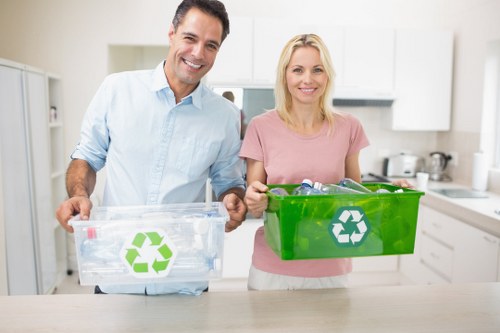 Community and corporate partnerships remain a cornerstone of sustainable rubbish area planning. By working with charities, social enterprises and borough initiatives we increase reuse rates and extend product lifecycles. This collaborative model reduces the need for virgin materials, supports local jobs in refurbishment and recycling, and broadens the social benefit of commercial waste removal West Ham services. Adopting these practices creates resilient, low-carbon waste systems that benefit businesses and the neighbourhood alike.
